About the Authors:
Garik Avetisyan, Davit Gabrielyan, and Anastasia Saroka are co-founders of Flexy Global, a design and development partner for startups and global enterprises. Garik built and successfully exited a consumer app used by millions. Davit brings 15 years of experience leading complex projects and operations at international companies including Orange and Coca-Cola Hellenic. Anastasia, Design Director at Flexy Global, brings experience designing products for large corporations and startups in the fitness industry. Together, they believe advanced technology creates greater value when people can understand it, trust it, and use it confidently.
Six years ago, when we founded Flexy Global, we chose a star for our logo. It represented the sense of magic we wanted to bring to our work: turning ambitious ideas into experiences that feel clear, thoughtful, and possible. Years later, that symbol took on a more literal meaning when we began designing websites for aerospace startups.
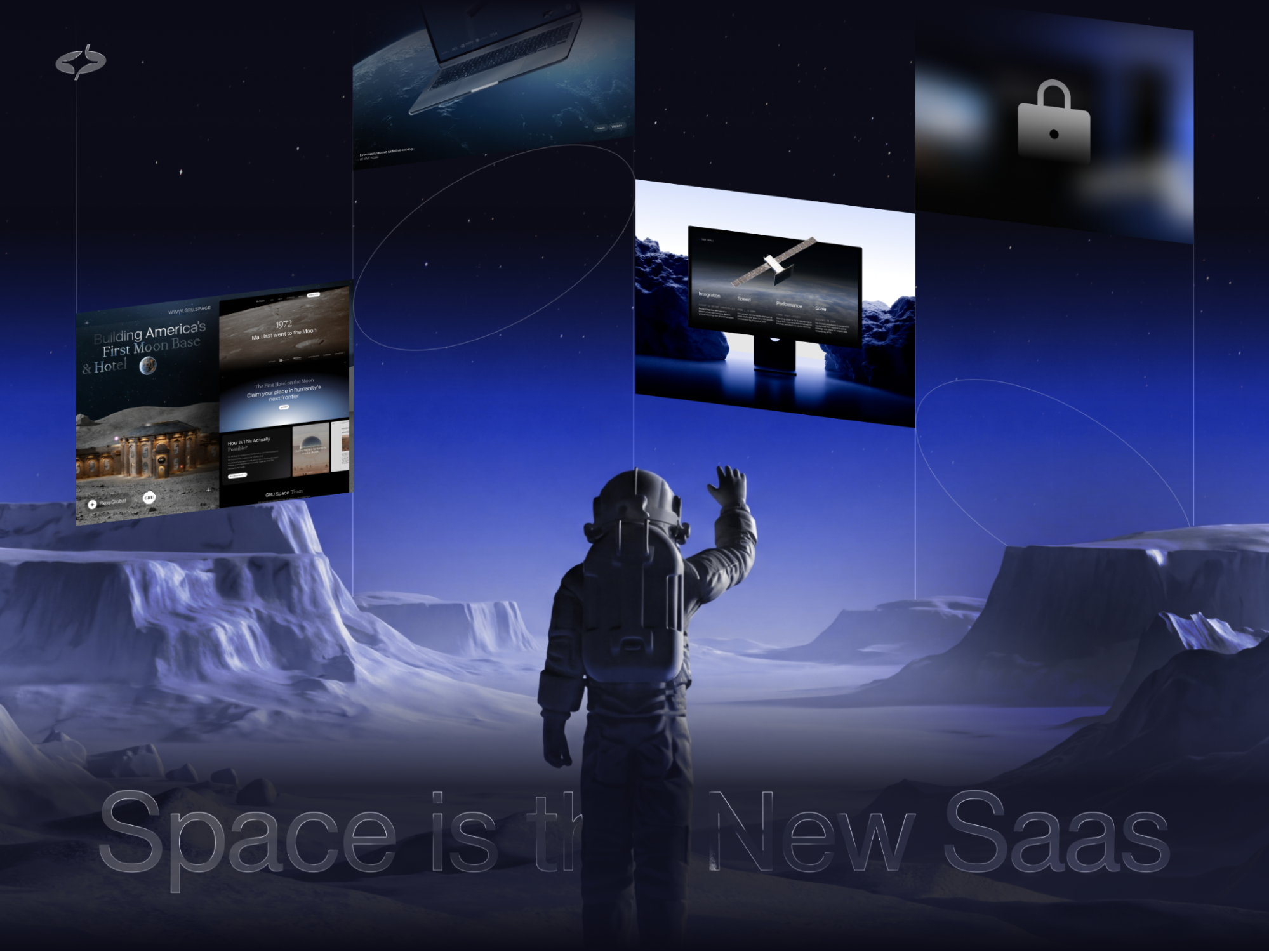
Today, we design websites for aerospace startups building lunar hotels, orbital AI data centers and space-based networks. Our work includes GRU Space, Starcloud and Exosat, along with several projects we cannot name yet.
Why aerospace startups need SaaS-grade websites
Across these projects, the recurring challenge has been the same. We have to make complex services clear, build trust in products that do not exist yet, and give the right audience a reason to act.
As the cost of sending payloads into space falls, the space economy could grow to the scale of national economies. Thousands of companies could offer new goods and services, from orbital computing to lunar bases. They will need the clarity, proof, and conversion paths of strong SaaS and e-commerce experiences.
Here are four lessons we have learned along the way.
1. Space is the new SaaS: sell what the rocket makes possible
Aerospace startups often lead with satellites, payloads, or engineering breakthroughs. Their customers want the outcomes those technologies enable.
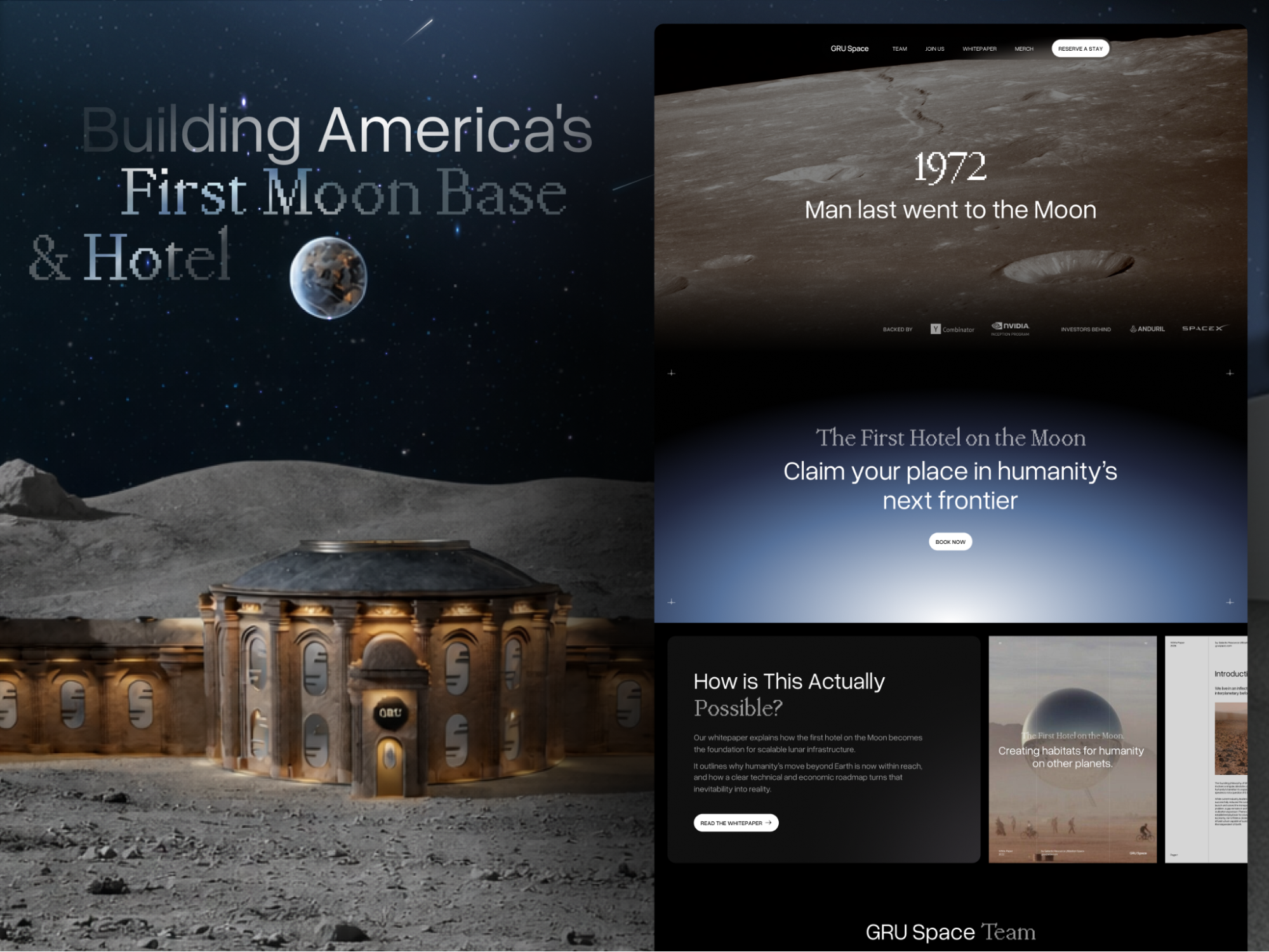
Starcloud sells access to AI compute in orbit. Exosat offers satellite capacity and infrastructure to operators that need more control over their networks. GRU Space invites future guests to reserve a place in a lunar hotel. Each website needs to clarify the offer, identify its audience, and guide them to the next step.
For GRU, we treated the reservation path like luxury e-commerce with an unusually long sales cycle. The primary call to action stays visible throughout the experience. Meanwhile, the journey introduces the vision, the timeline, and the selective qualification process behind a stay planned for 2032.
Ambition still needs to lead to concrete action. Design for the wow, and make sure it ends in a conversion.
2. Design the gap between vision and proof
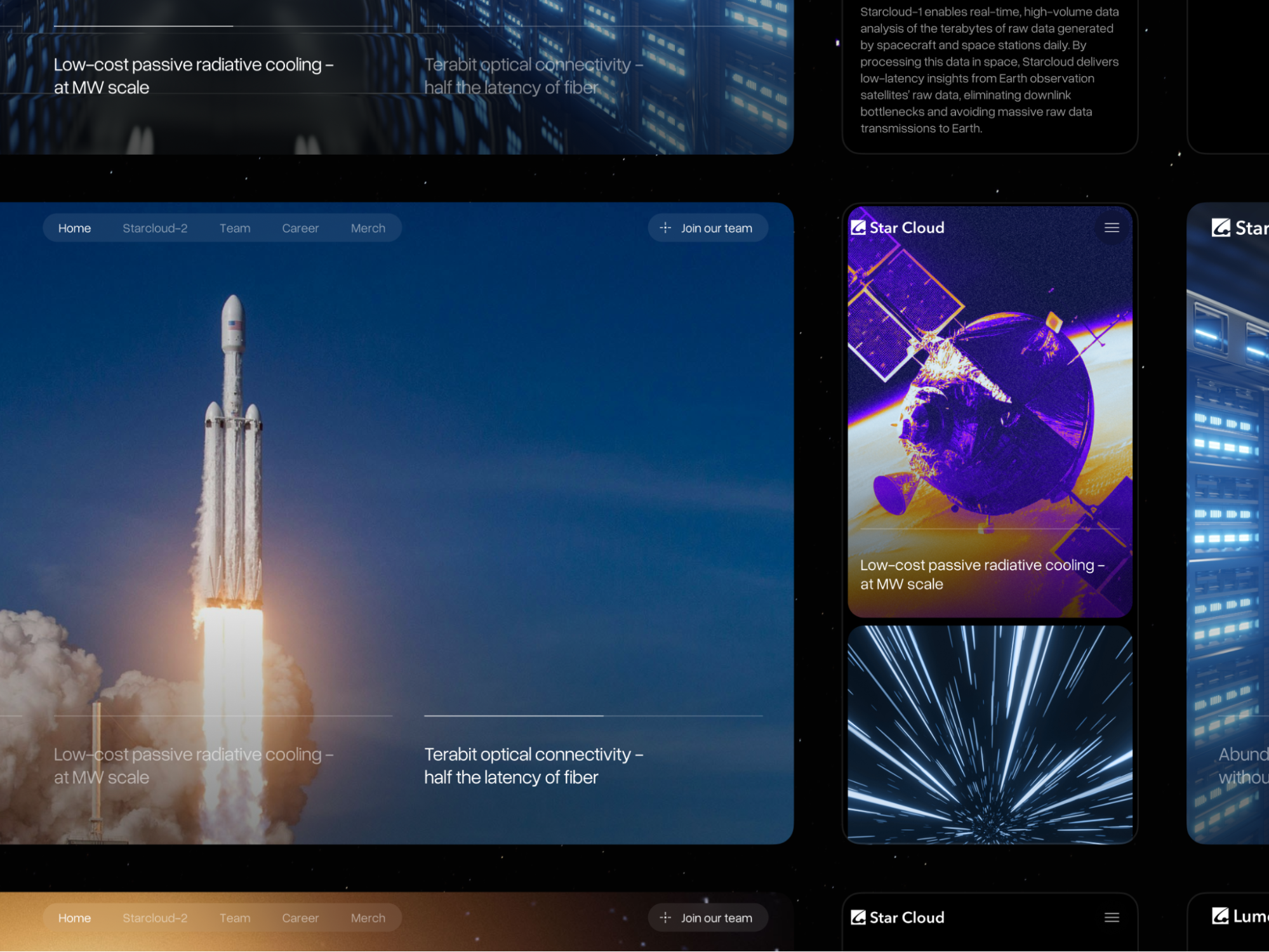
Aerospace startups often sell products scheduled to launch years from now, while investors, customers, and talent evaluate them today. That makes the roadmap central to the website story.
For Starcloud, the progression from Starcloud-1 to later missions shows how orbital computing can grow into commercial infrastructure. GRU follows a similar path, from lunar systems tests and habitat deployment to a hotel that can receive guests.
We brought these roadmaps into the main homepage journey. The scroll connects each long-term promise with the mission, milestone, or technical proof that moves it closer to reality. Visitors can follow the sequence and see how one stage prepares the next.
A timeline turns science fiction into a plan.
3. Proof beats renders
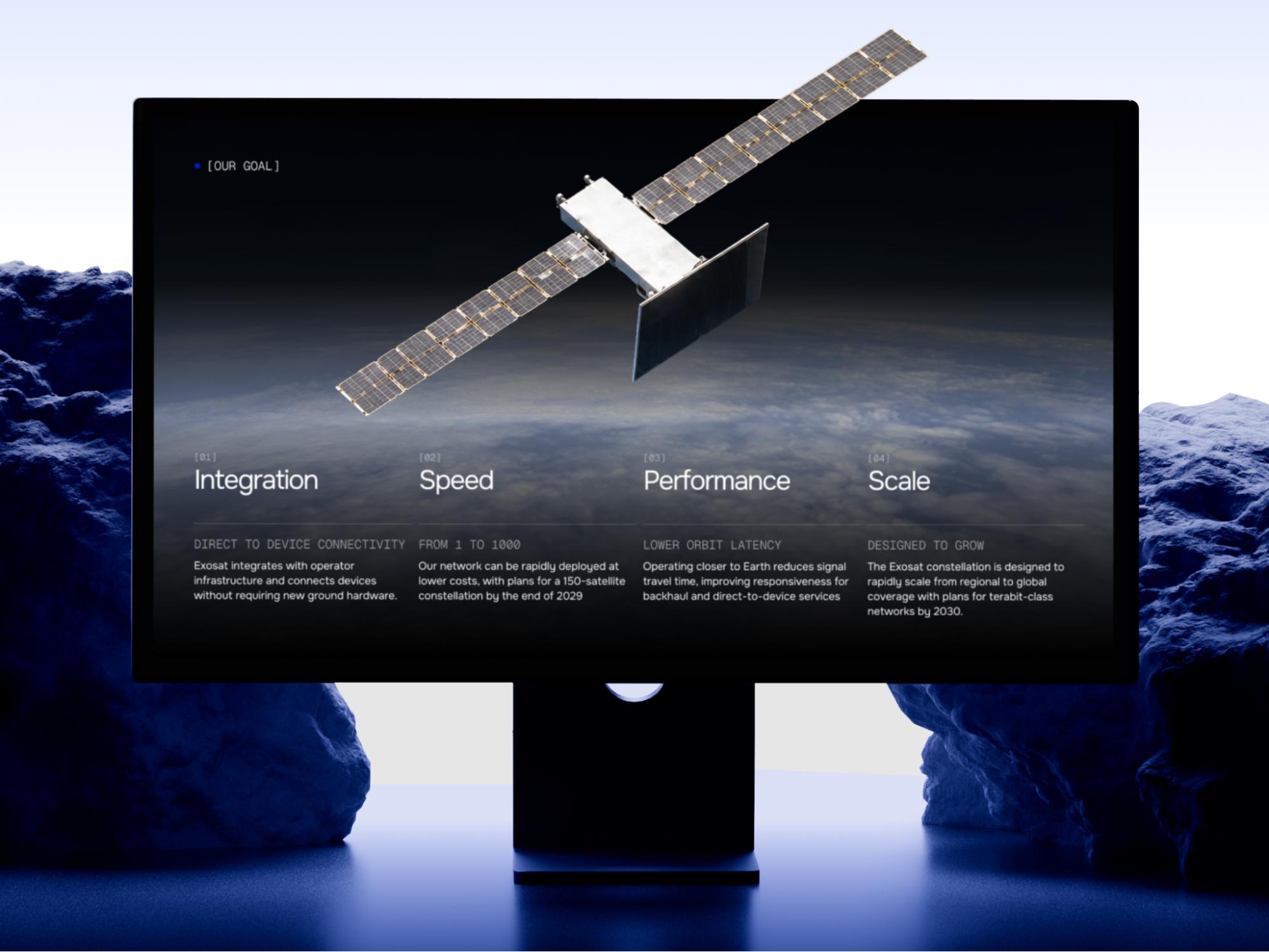
Renders help audiences understand products that are too large, too distant, or too early to photograph, and skilled 3D designers can make them convincing. Yet aerospace websites filled entirely with flawless satellites and glowing horizons can quickly feel speculative.
Starcloud-1 offers stronger proof. It launched in November 2025 carrying the first NVIDIA H100 GPU into orbit, later running Google’s Gemma model and training an AI model in space. Those achievements make the larger vision credible.
We grounded ambitious claims in real artifacts: hardware and mission photography, launch dates, named partners, technical milestones, and concrete firsts. The website keeps its sense of scale while giving visitors evidence they can verify.
Our practical rule is simple: one credible fact for every major render.
4. One site has to persuade four audiences
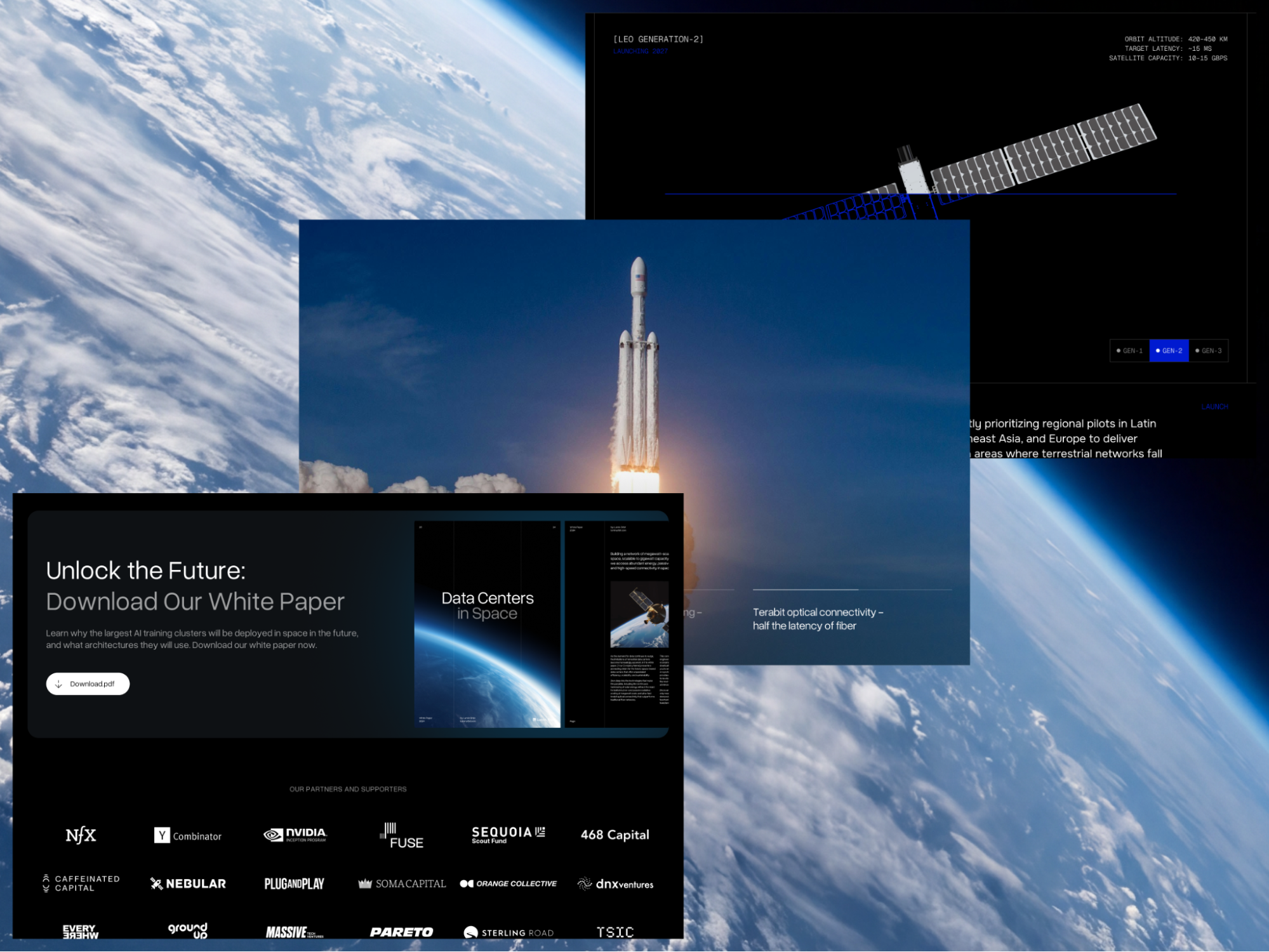
An aerospace website may need to address investors, customers, engineering talent, and press or regulators within the same experience. Each group arrives with different questions, so the content needs clear layers.
For Exosat, the first layer communicates the larger proposition: satellite infrastructure that gives sovereign operators more control. The next layer explains direct-to-device capability, compatibility with existing infrastructure, and faster coverage expansion. Deeper sections cover spectrum, orbit, latency, capacity, and manufacturing details for technical readers.
Across these projects, the headline establishes the strategic idea. The next sections explain customer value, and dedicated pages or deeper content provide the technical substance. Careers also get a clear route, because hiring is a major conversion for deep-tech startups.
The result is a focused experience that serves different levels of expertise. One story should offer several levels of detail.
The shared problem behind every aerospace website
GRU Space, Starcloud and Exosat operate in very different parts of the aerospace economy. Their websites still solve a shared communication problem. Each must turn a complex, future-facing idea into a service people can understand, trust, and act on today. For web designers entering the sector, that is the brief worth preparing for.
SpaceX’s push toward reusable launch systems has helped open the door to a new space economy. Orbital infrastructure, lunar settlements, and eventually asteroid resources could expand what humanity can build.
Elon Musk captures that future simply: “You want to wake up in the morning and think the future is going to be great.” The growing number of space startups is making that optimism feel tangible.
Find more Community stories on our blog Courtside. Have a suggestion? Contact stories@dribbble.com.