About the Author:
Boris Sage is the Principal Consultant at DesWave, a design and development agency helping businesses build websites, e-commerce platforms, and brand identities that convert visitors into customers.
We run a design and branding studio. Most of what I do sits between the people who need design and the people who make it, so I see a lot of inbound. Over the last year, something shifted in that inbound. I have not seen it described properly anywhere, so I am going to describe it.
Every inquiry now arrives with an artifact attached.
A logo generated from a prompt. A landing page someone put together in an afternoon. Increasingly, a whole site, already live, with the domain already pointed at it. Two years ago, people wrote to me describing what they wanted. Now they send me a file and ask what I think.
That shift is changing small business website design faster than most studios admit, and it has changed how I talk about our work.
Why I stopped saying AI only makes design work faster
For most of this year, I said AI makes the work faster without taking anybody’s job. I said it on calls. I put it in emails. I believed it, because it was true of my own studio.
I have stopped saying it, and the reason is worth explaining.
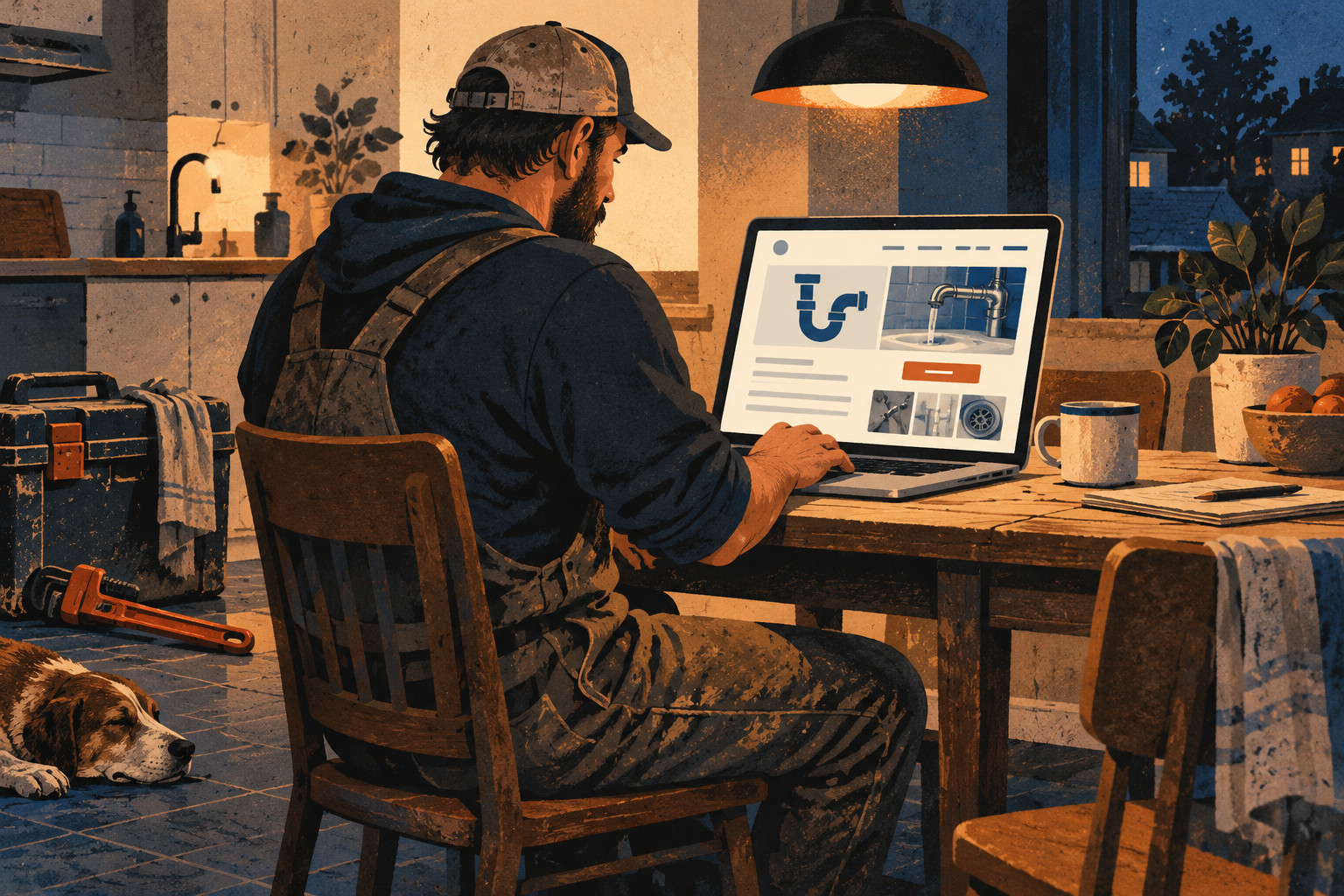
Somebody used to build the plumber’s website. The barber’s, the roofer’s, the mobile dog groomer’s. Four or five pages, a contact form, a gallery, and a phone number. It was unglamorous work, but it was a real book of business. For many independent web designers, it was the whole book.
That work has left.
The plumber now builds the site himself in the evening with an AI website builder. It is fine, and fine is what he needed. The demand is still there, but it moved into tools that cost less than any designer. People who couldn’t move up the market with it are gone.
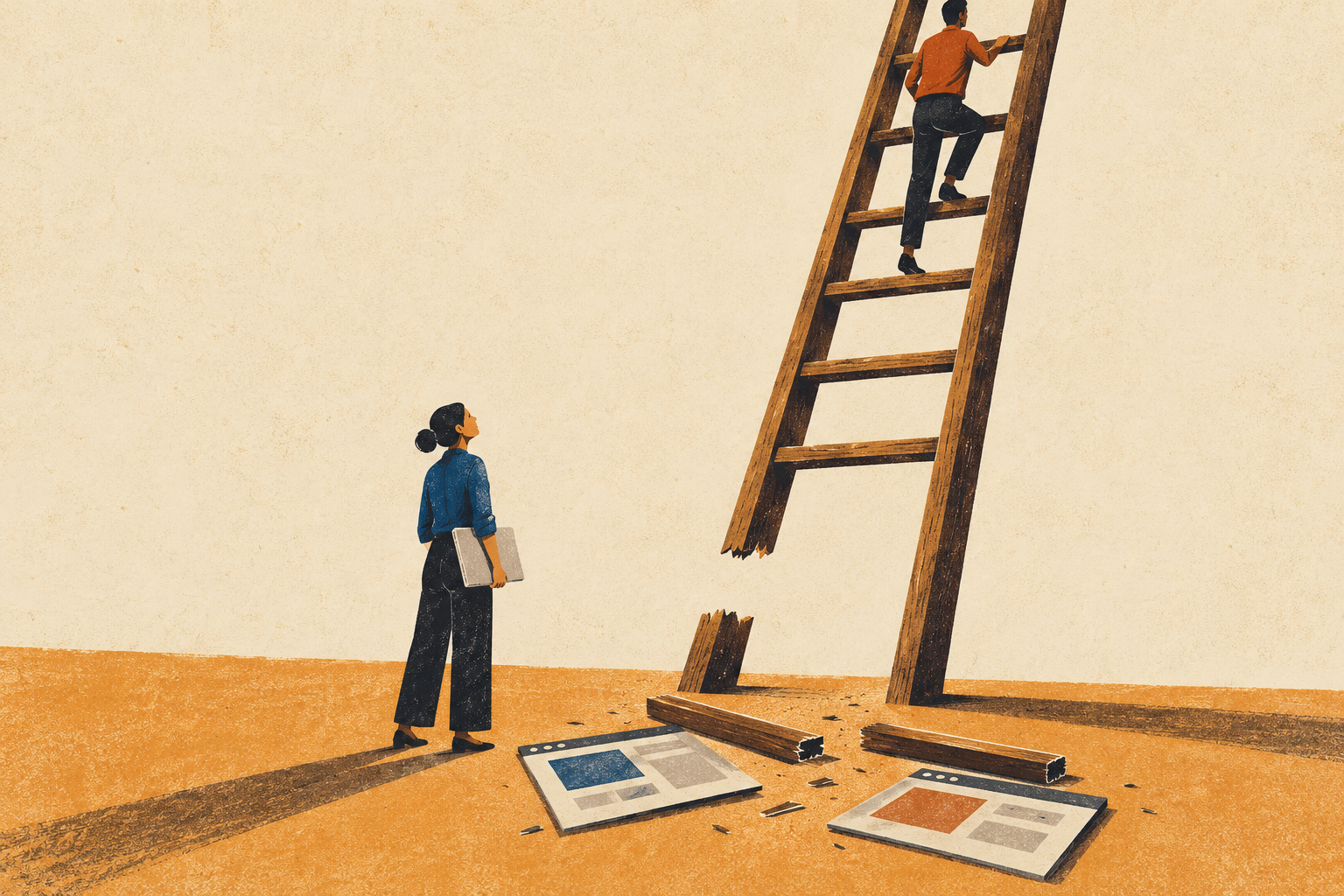
So the accurate version is that the market floor was deleted. The people still standing are the ones who could climb. I happen to be one of them, which is exactly why I believed the comfortable version for so long.
“Can you just clean this up?” Three checks for AI-built websites
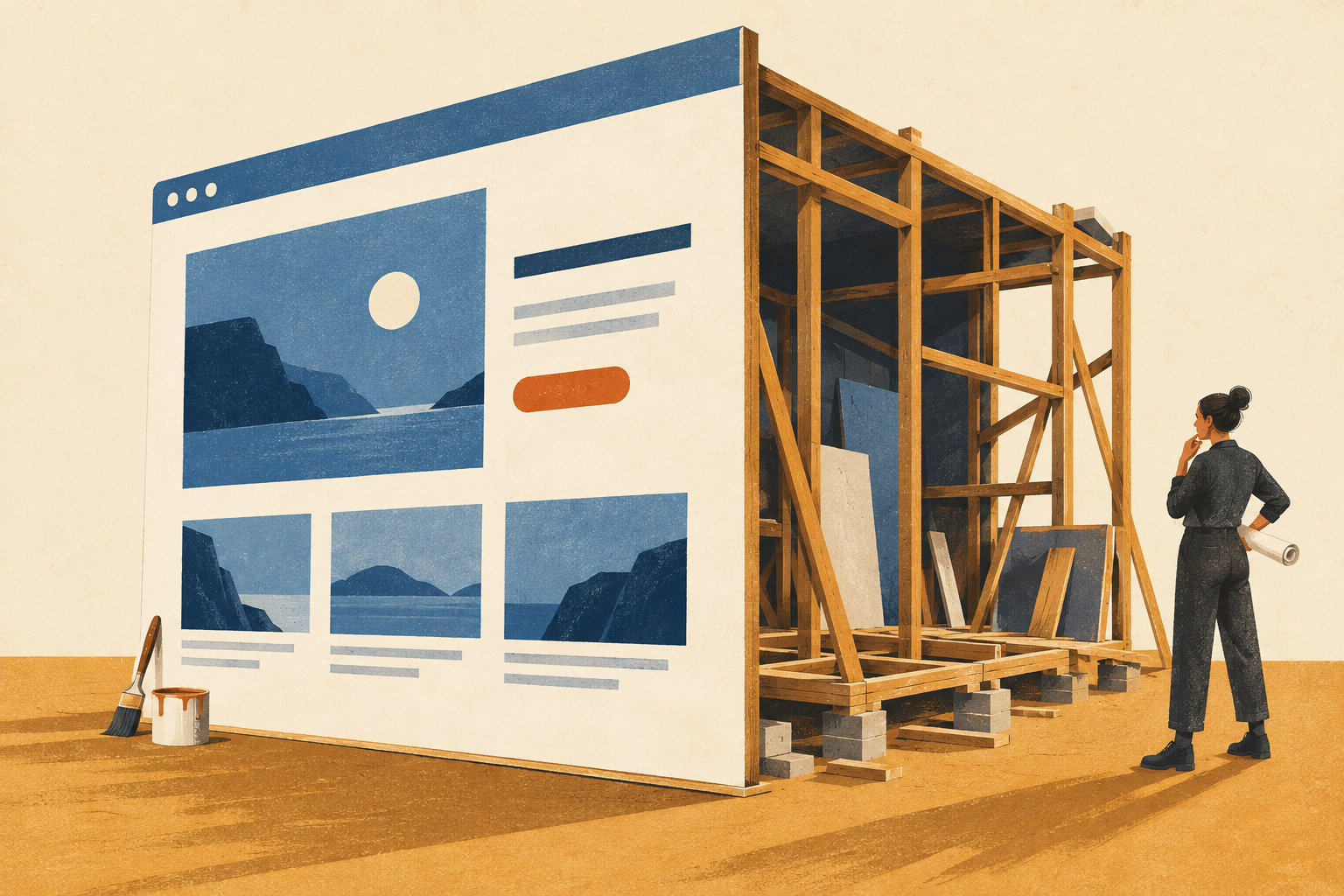
Here is what replaced the floor, in my inbox at least.
People arrive having built something, and they ask for refinement. Polish. A few professional touches. Sometimes that is precisely right, and a few hundred dollars of work gets them where they want to be.
Often, it is a rebuild wearing refinement’s clothes.
The difference is almost never visible from the front of the site. It sits in three places:
- Whether anybody non-technical can change a paragraph of text without calling somebody.
- Whether the site can be exported, or whether it is welded into the tool it was made in.
- Whether the logo exists as a vector or only as a PNG. Logo designers work in vector because it decides whether the mark can ever go on a sign, a van or anything embroidered.
A site that fails all three is a good-looking prototype, however finished it appears. A prototype is a genuinely different object from a product. Prototypes are supposed to look finished. That is their entire point.
This is now the hardest commercial conversation of my week, and I don’t think our industry has worked out how to have it yet. The client believes they are buying the last mile. You are looking at the first one. Quote the last mile, and you lose money. Quote the first, and you sound like you are inventing problems to inflate an invoice.
I now walk people through those three checks before I quote anything, so they reach the conclusion rather than me. It has not failed me yet. I wrote a longer version for business owners, covering the checks and what they actually mean. The more owners self-diagnose before they call anyone, the better the conversation goes for everybody.
What I got wrong about clients arriving with AI drafts
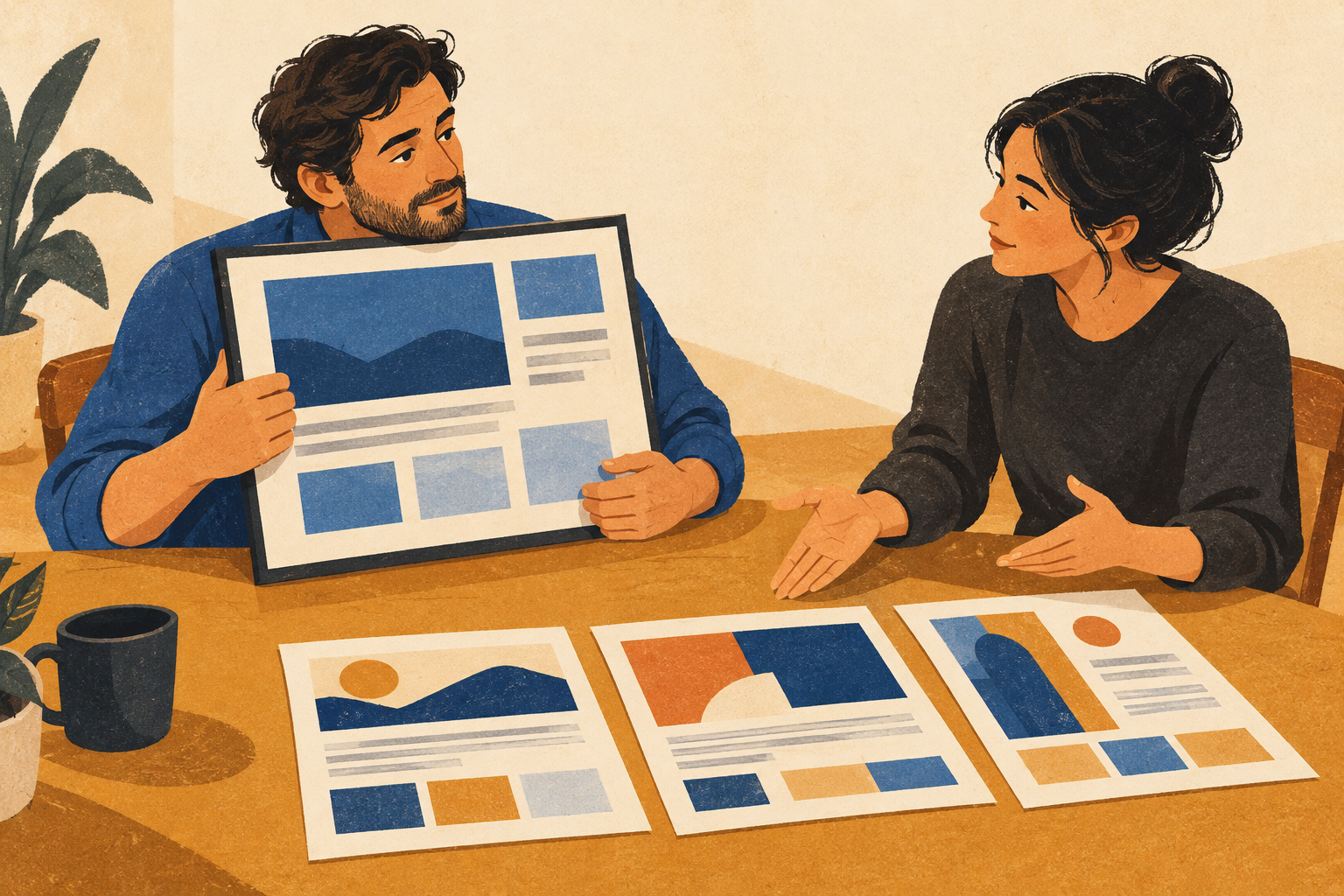
I assumed a client arriving with a draft would make my job easier. It would be a starting point, a reference, something to react to instead of a blank page.
It makes production easier. It makes consulting considerably harder, and I didn’t notice that for months.
When a client arrived with an idea in their head, it was soft. You put three or four directions in front of them, and the imagined version quietly dissolves. It was never really a picture. It was a feeling wearing the costume of a picture. They pick the direction that actually works, and they are usually relieved.
A rendered draft does not dissolve. They have already seen their idea executed, and they are attached to one specific version, with a particular typeface and a particular blue. The question has quietly shifted from “what should this be” to “can you make this better.” Those two questions do not produce the same answer.
The cost shows up in the most expensive place. The generated draft is competent and generic, because the model averages everything it has ever seen. Generic is the one thing a small business cannot afford when it needs to look different from four competitors in the same town. You are now arguing against an artifact instead of a vague preference, and artifacts win arguments.
I do not have a clean solution. What has helped is asking one question early, before anyone falls in love with anything: what will this brand have to do in a room you are not in? It asks about the job before the look. That question has no draft attached, so it reopens the space the draft closed.
What AI did not change about design project timelines
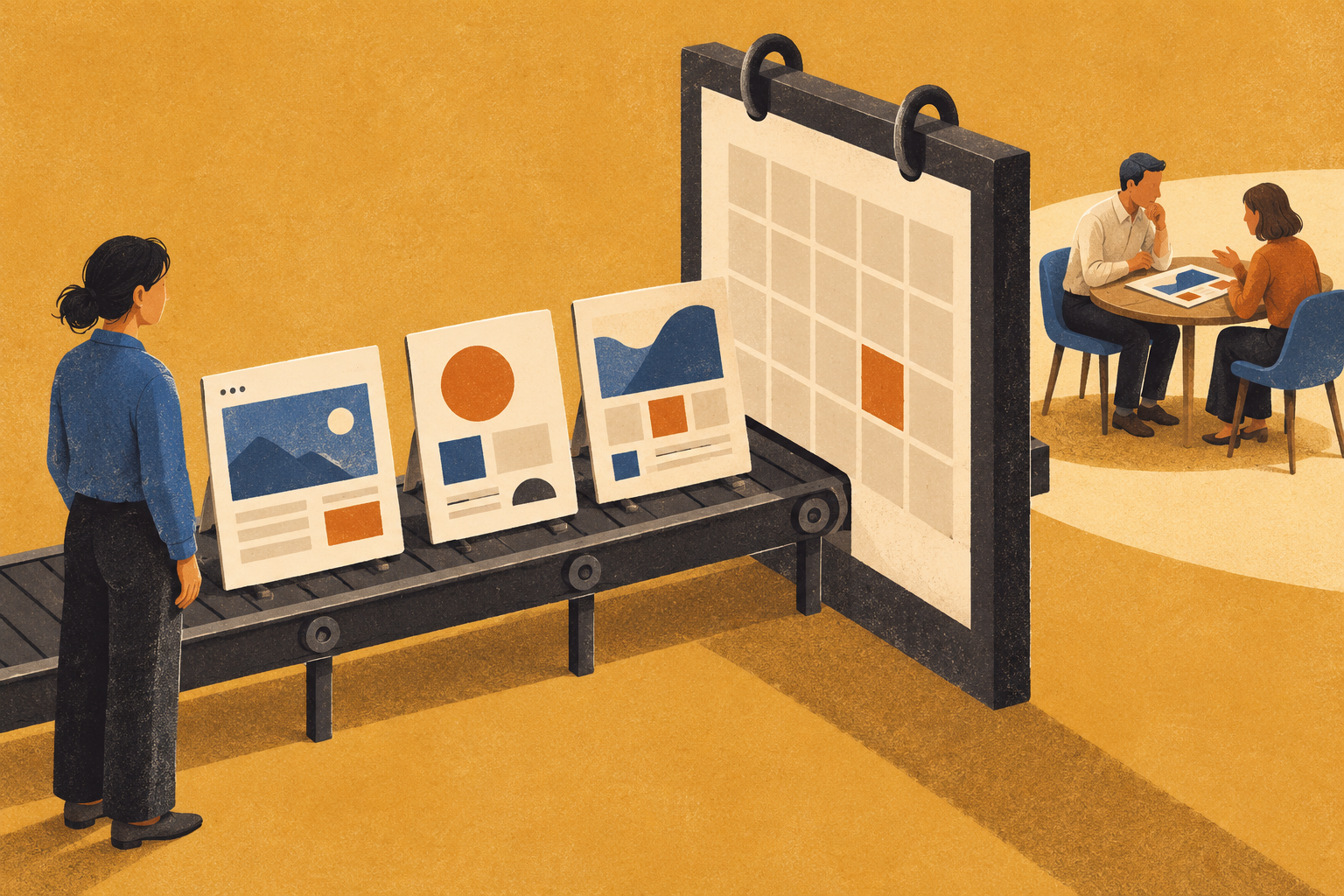
Production time has come down. I will not pretend otherwise, and studios claiming nothing has changed aren’t being straight with anyone.
Production time was never what made projects long, though.
The gap between a four-week project and a ten-week project almost never comes from how fast anyone draws. It comes from how long feedback takes to arrive, how scattered it is when it does, and how many people must agree before anything moves. A logo project can be sold honestly as two weeks and still run five. Not a single hour of that delay happens at a desk.
No model has touched that, and I do not think one will. It is a decision problem, and decisions live in the client’s calendar.
Which is mildly funny, when you think about it. We got faster at the part that was never the bottleneck.
When clients assume your design studio uses AI

This comes up constantly, and designers get defensive. I think the defensiveness is a mistake.
Clients increasingly assume we use AI somewhere in the process. We do, in places, and I am not interested in pretending otherwise. Being seen as a studio that has adapted is better than being seen as one that has not.
It only works as an asset when it comes with a clear answer about what clients pay for that the tool does not do. On its own, “they assume you use AI” becomes a discount argument the client builds in their own head. It is the same pressure that deleted the floor of the market.
My answer, for what it is worth, has four parts. Clients pay for judgment about what to build before they spend money building it. They pay for the parts that have to survive print, embroidery, signage, and a phone screen in sunlight. They pay for a system, not a file. And they pay for somebody who is accountable in eight months when something breaks.
That is a shorter list than it was three years ago. I also think it is a more honest one.
Where I have landed on AI and small business design
The optimistic and pessimistic reads are both partly right, which is why the argument never resolves.
AI came for the bottom rung of the ladder, which happened to be the rung most people used to climb on. The work above it got more interesting and, in my experience, better paid. The work below it is gone and won’t come back.
If you are early in your career and planned to learn the trade by building small business sites, that route is closing. Learn the judgment part instead: working out what a business actually needs before anyone opens a design tool. That is the piece that survived. Most people who arrive in my inbox with a finished-looking draft have no idea they skipped it.
I do not know how much of this will still be true in a year. Ask me then.
Find more Community stories on our blog Courtside. Have a suggestion? Contact stories@dribbble.com.