

About this Service
UITOP designs and develops custom CRM software around customer records, sales and service workflows, pipelines, roles, permissions, communication history, reporting, and integrations.
We work with companies that need a new CRM, want to extend an existing system, or have customer workflows that no longer fit their current software.
The work starts with the way customer relationships move through the business. We map accounts, contacts, deals, activities, tasks, stages, responsibilities, approvals, handoffs, and the information each team uses during the workflow.
That process defines the CRM data model.
Customer records may connect to companies, deals, projects, messages, invoices, tasks, documents, service requests, or other business objects. We define those relationships before individual screens and modules are implemented.
For multi-team CRM products, we also define how sales, account management, support, operations, and administrators work with the same customer information through different actions and permission levels.
UITOP can work across CRM product architecture, UX/UI design, frontend and backend development, database structure, APIs, integrations, migration planning, QA, and continued product development within the agreed scope.
What You Get
CRM discovery and workflow analysis
Current sales, service, or account-management process review
Customer and account data-model definition
Lead, deal, and pipeline workflow mapping
User-role and permission mapping
Status, approval, and business-rule definition
Product architecture and information architecture
UX/UI design for critical CRM workflows
Responsive web application design
Frontend development
Backend development
Database implementation
REST API development
Third-party integrations
Contact and company management
Lead and opportunity workflows
Deal and pipeline management
Task and activity tracking
Communication-history interfaces
Email or messaging integrations where included
Dashboards and reporting
Search, filters, tables, forms, and detail views
Role-based administration
Loading, empty, error, permission, pending, and exception states
Data migration planning
Functional and technical QA
Engineering documentation
Release and continued development support where included
CRM Areas We Work With
Depending on the product scope, the CRM can include:
Accounts and companies
Contacts
Leads
Opportunities and deals
Pipeline stages
Activities and tasks
Follow-ups
Notes and communication history
Project or service records
Customer-support workflows
Account-management workflows
Quotes and related commercial records
Dashboards and reporting
Team and user administration
Roles and permissions
Approval flows
Notifications
Email and calendar connections
Billing or ERP integrations
Customer portals
Industry-specific CRM modules
The exact module set depends on the customer process and systems already used by the business.
What Custom CRM Development Needs to Define
Customer Data Model
Which records describe the customer relationship? The CRM may need companies, contacts, leads, deals, projects, activities, messages, documents, or another set of related records. We define how those records connect before the workflows are implemented.
Pipeline & Workflow Logic
A deal or customer record can pass through several stages, ownership changes, approvals, follow-ups, and status updates. The product needs clear rules for those transitions and the actions available at each stage.
Roles & Permissions
Sales representatives, managers, account teams, support staff, operations, and administrators may need different access to the same CRM data. We define record visibility, actions, administrative controls, and permission states for the roles included in scope.
Activities & Communication
Customer history can include calls, messages, emails, meetings, notes, tasks, and other activity. The product structure needs to show that history in the context of the related customer, company, deal, or workflow.
Integrations
CRM products often exchange data with email, calendars, accounting software, ERP systems, billing platforms, websites, support systems, marketing tools, and internal applications. We define which information moves between systems, how it maps to CRM records, and which states users see when synchronization is delayed or fails.
Migration
Existing customer information may live in spreadsheets, another CRM, databases, or several tools. Migration planning defines source fields, record relationships, duplicate handling, validation, and testing before the new CRM relies on that information.
Reporting
CRM reporting depends on structured customer, pipeline, activity, and ownership data. We define which records, stages, filters, dates, roles, and calculations support each report included in scope.
Existing CRM Context
For an existing system, we review the current workflows, data model, integrations, permissions, and product behavior before defining the selected changes.
Who This Is For
This service is a good fit for:
Companies whose customer workflows have outgrown their current CRM
Teams using spreadsheets alongside an existing CRM
Businesses that need a CRM built around a specialized sales or service process
B2B companies with complex account and customer relationships
Product teams developing CRM software for a specific industry
Companies that need customer data connected to ERP, billing, support, or operational systems
Existing CRM products adding new modules
Teams introducing more detailed roles and permissions
Companies planning migration from a legacy CRM
Product and engineering teams that need design and development across the same CRM scope
How We Work
1. Customer Process & System ReviewWe review how customer relationships are currently managed, which teams use the information, existing tools, known workflow issues, integration requirements, and technical constraints.
2. CRM Scope & Workflow MappingWe define the customer records, pipeline stages, users, actions, business rules, handoffs, permissions, and exceptions included in the selected phase.
3. Data & Product ArchitectureThe team maps record relationships, information architecture, frontend requirements, backend responsibilities, database structure, and API contracts.
4. UX/UI DesignWe design the selected CRM workflows, pipelines, record pages, tables, forms, dashboards, communication areas, reports, and administration states.
5. Frontend & Backend DevelopmentUITOP implements the approved CRM scope across interface behavior, application logic, database operations, APIs, and required integrations.
6. Migration, QA & Workflow TestingWhere migration belongs to the project, we validate field mappings and transferred records. We also test workflows, permissions, integrations, validations, and exception states.
7. Release & Continued DevelopmentWe prepare the agreed scope for release and can continue with additional modules, workflow changes, integrations, or engineering support.
What You Can Expect
CRM Structure Based on the Real Customer Process
The project starts with customer records, workflow stages, team responsibilities, and system relationships before the interface expands into secondary functionality.
Connected Product & Data Model
Customer records, deals, activities, tasks, communication, and related business objects use one defined structure across UX and engineering.
Role-Aware Workflows
The CRM can reflect different responsibilities and access scopes across sales, account management, support, operations, and administration.
Integration Context
External data connections are mapped as part of the workflow when they affect customer records, actions, or status changes.
Migration Planning
Existing customer data receives a defined source mapping, validation approach, and testing scope before it becomes part of the new CRM.
Reusable Product Patterns
CRM components, record states, workflow behavior, and technical patterns establish a consistent foundation for related modules.
Technology
Technology depends on the product requirements and existing environment. UITOP development work includes:
React
TypeScript
Vite
Tailwind CSS
Material UI
Zustand
Node.js
Express
PostgreSQL
MySQL
Prisma ORM
REST APIs
Third-party integrations
CI/CD workflows
Automated testing and QA
For an existing CRM, UITOP can work with the current technical environment where it fits the agreed project scope.
CRM Product Experience
UITOP has worked with several B2B products built around customer, account, project, and operational relationship data.
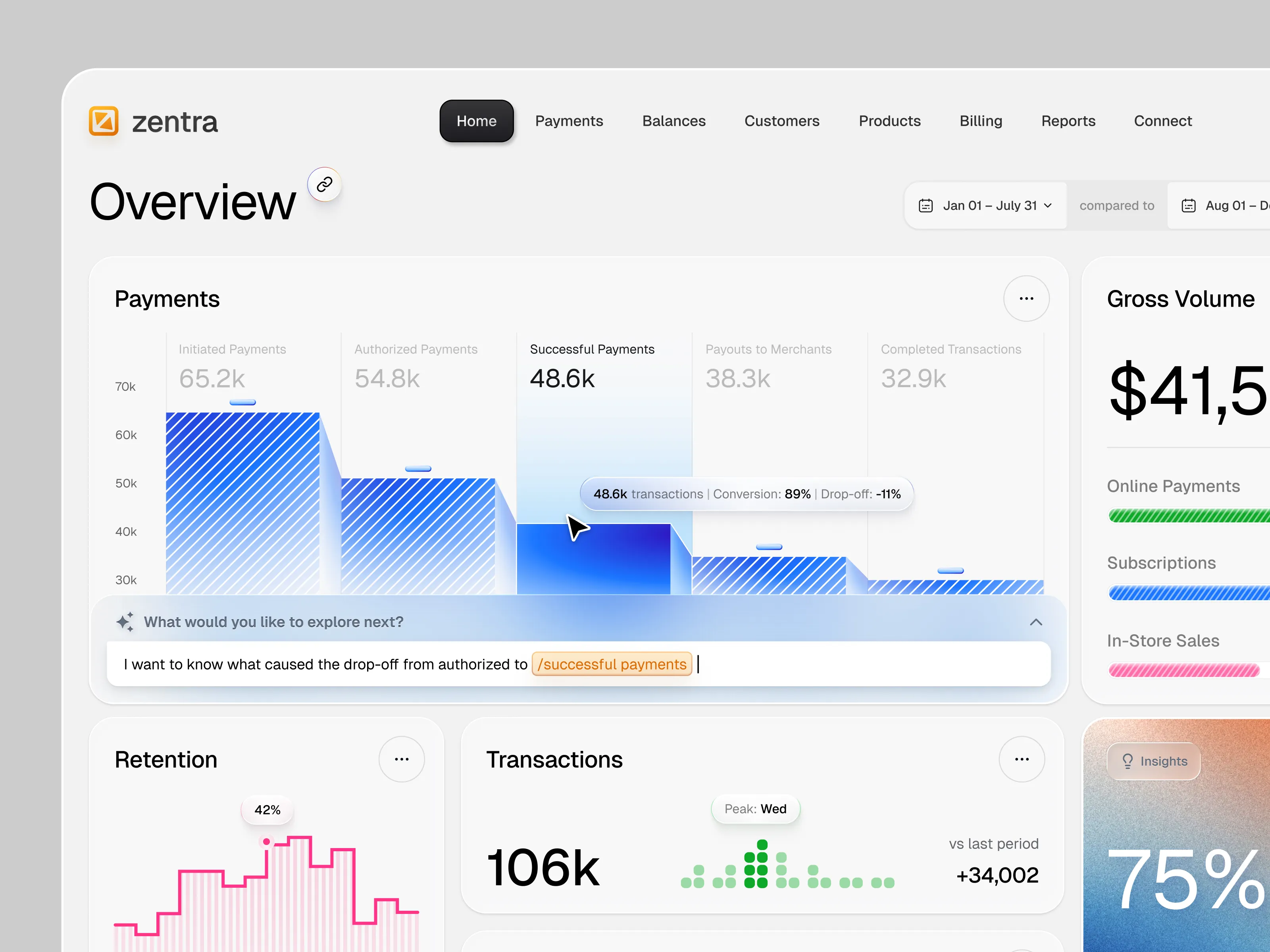
Slabstack is a specialized CRM for concrete, asphalt, and aggregate producers. UITOP redesigned the product architecture and more than 150 screens covering companies, projects, reporting, activity, and built-in communication.
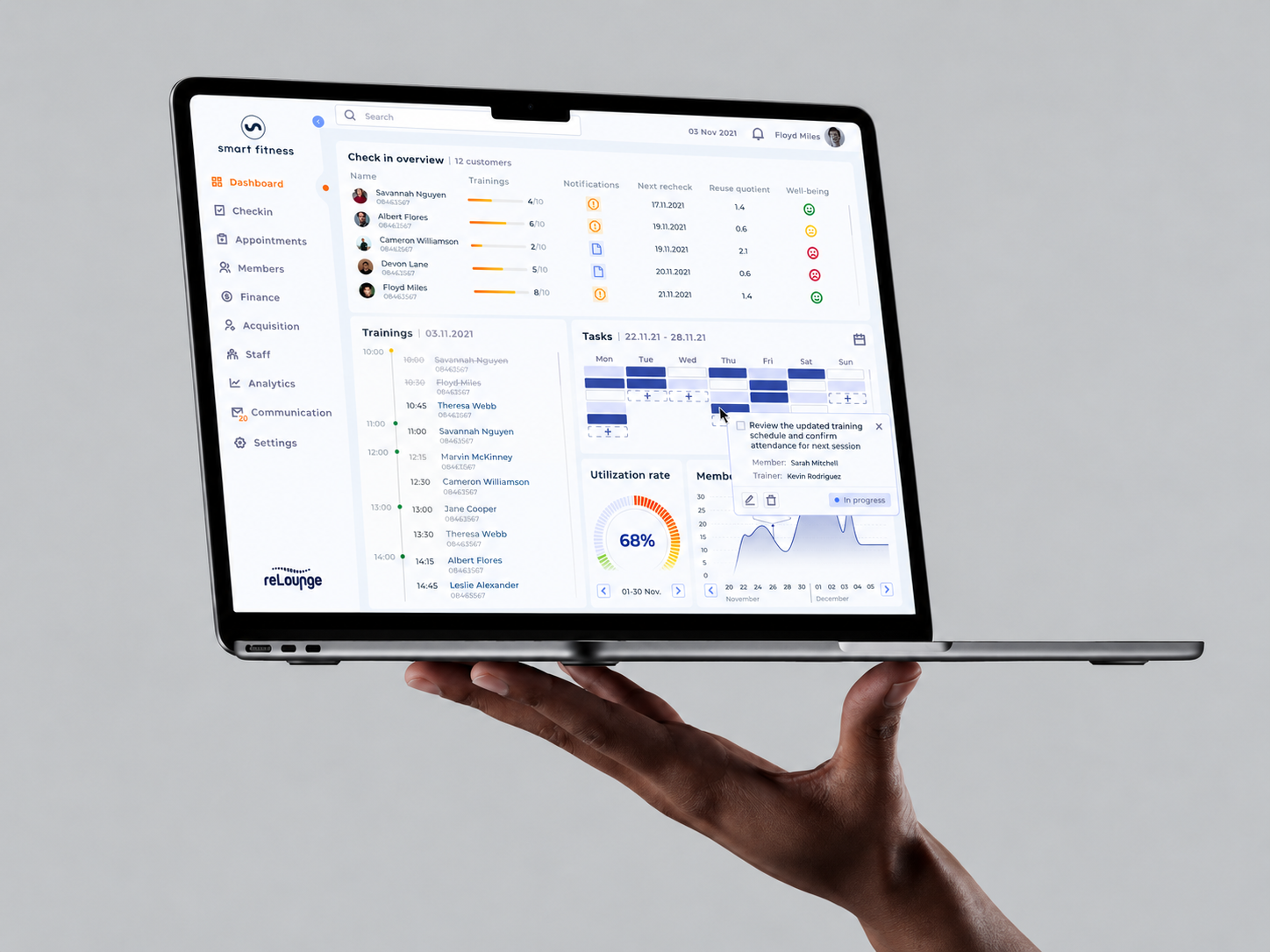
ReLounge is a CRM for back-health centers. UITOP worked on product workflows covering patient records, appointments, analytics, internal communication, and connected operational information.
Aimiable adds another example of a multi-role business platform with scheduling, workload, team activity, forecasting, and data-heavy management workflows.
These projects provide CRM and workflow-product design evidence. We keep them separate from UITOP's broader software-development proof because their public case material primarily documents product-design work.
UITOP's CRM development service itself covers frontend and backend implementation, database design, integrations, migration, testing, and continued development within the agreed scope.
The listed price covers a focused custom CRM development phase built around an agreed set of customer workflows and modules.
Final scope depends on:
number of CRM modules;
customer and account data complexity;
pipeline and workflow rules;
number of user roles;
permissions;
frontend and backend requirements;
integrations;
migration volume and data quality;
reporting requirements;
existing CRM or codebase;
QA and release scope.
Larger CRM systems can be planned as sequential product and engineering phases.
Planning a custom CRM or extending an existing customer platform?
Share the workflows, current tools, and customer data structure, and we can define the CRM development scope around the records, roles, rules, integrations, and migration requirements involved.