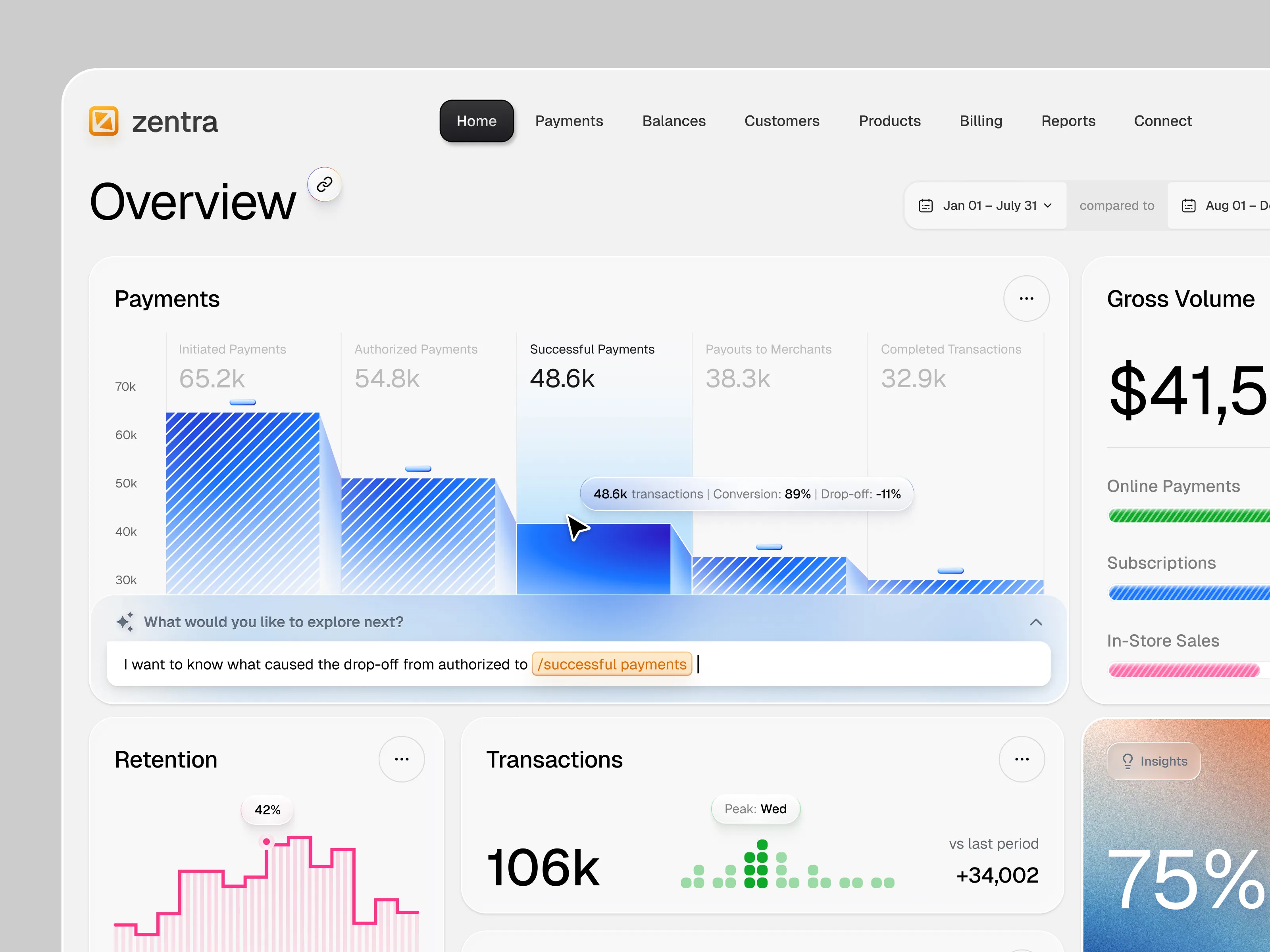
About this Service
Complex B2B software gets harder to use as products grow. New modules appear, more user roles are added, dashboards collect more data, and workflows that were once simple become spread across multiple screens.
The problem is rarely a lack of functionality. It is usually that users have to work too hard to understand where they are, what needs attention, and what to do next.
UITOP designs and redesigns B2B SaaS products, enterprise software, web applications, dashboards, CRM and ERP systems, internal tools, and workflow platforms.
We turn complex product logic, user roles, and data-heavy workflows into clear interfaces that are easier to navigate, understand, and extend as the product grows.
This service is suited to both new SaaS products being designed from scratch and existing platforms that need a clearer product structure before scaling further.
What you get
UX research and product workflow analysis
User flows and information architecture
Role-based UX for complex multi-user products
Wireframes for key workflows and product modules
High-fidelity UI design for primary screens and states
Data-heavy dashboards, tables, filters, and operational interfaces
Interactive Figma prototypes for testing, demos, or stakeholder review
Reusable design system and component library
Responsive behavior for relevant desktop, tablet, and mobile workflows
Developer-ready Figma files, states, specifications, and handoff support
Products We Design
B2B SaaS platforms
Enterprise software
CRM systems
ERP platforms
Operations and workflow management software
Admin panels and internal tools
Analytics and reporting dashboards
Data-heavy web applications
Multi-role platforms
Subscription and account-management products
AI-enabled SaaS interfaces
Industry-specific operational software
What You Can Expect
Direct communication: You work directly with the design team and receive regular progress updates.
Clear scope: Before design starts, we define the workflows, modules, and screens included in the engagement.
Workflow-first decisions: Product structure is based on how users complete real tasks rather than generic SaaS templates.
Consistent product logic: New modules and states follow shared interaction and design patterns instead of becoming isolated screens.
Developer-ready handoff: Components, states, responsive behavior, and implementation details are documented for engineering.
Tools
Figma for core UI/UX design, interactive prototypes, component systems, and developer specs
Claude, Lovable for AI-assisted research, flow mapping, and functional prototyping that feels like the real product
Slack, Google Meet, Zoom for communication
Direct Figma-to-Claude MCP setup: Where useful, approved Figma components can be connected to an AI-assisted implementation workflow to accelerate design-to-code handoff.
If your team already works with specific analytics, product-management, development, or communication tools, we adapt to your existing workflow.
Process and Communication
We don't force a rigid process. We adapt the project plan to your product, focusing only on the steps that make sense for you right now. No checklists or extra steps you don't need.
1. Discovery. We review your product goals, users, existing product structure, business constraints, and relevant competitors.
2. Workflow Mapping. We map the tasks users perform, the roles involved, and the information required at each step.
3. Information Architecture. We structure navigation, modules, permissions, and content so the product remains understandable as functionality grows.
4. Wireframing. We test the structure of critical screens and workflows before investing in visual design.
5. Visual Direction. We establish an interface direction that fits the product, audience, and existing brand.
6. UI Design. We create high-fidelity screens covering primary workflows, supporting states, errors, permissions, and data-heavy views.
7. Prototyping. Key workflows are connected into an interactive prototype for usability testing, stakeholder review, demos, or investor presentations.
8. Design System & Handoff. Reusable components and product patterns are organized for engineering, with implementation specifications and design support during development.
Common B2B SaaS UX Problems We Solve
Navigation becomes harder as new modules are added
Different user roles need different information and actions
Dashboards show a lot of data without clear priority
Important workflows require too many screens or repeated data entry
Similar actions behave differently across different parts of the product
Tables, filters, forms, and system states become difficult to manage at scale
New functionality no longer fits cleanly into the original product structure
Developers lack a reusable design system for adding new features consistently
Why Product UX Matters
Complex software needs clear hierarchy
Users should be able to understand what requires attention, where information lives, and what action comes next without learning the internal logic of the system.
Multi-role products need role-aware UX
An administrator, operator, manager, and end user may use the same product for completely different tasks. Their interfaces should reflect those differences.
Data-heavy screens still need to support decisions
Dashboards, tables, filters, and reports should help users interpret information and act on it rather than simply display more data.
Product growth needs a system
A reusable component and interaction system gives product and engineering teams a consistent foundation for adding new modules and workflows.
Building a New SaaS Product?
We can help define the product structure before development starts, from workflows and information architecture to a prototype and implementation-ready design system.
Already Have a SaaS Product?
If the functionality is there but navigation, workflows, or interface consistency have become difficult to manage, we can restructure and redesign the product without treating it like a blank slate.
Not sure where to start? Send us your current product, requirements, or prototype. We can review the scope and outline the areas worth designing first.